Sub-Total: R0.00
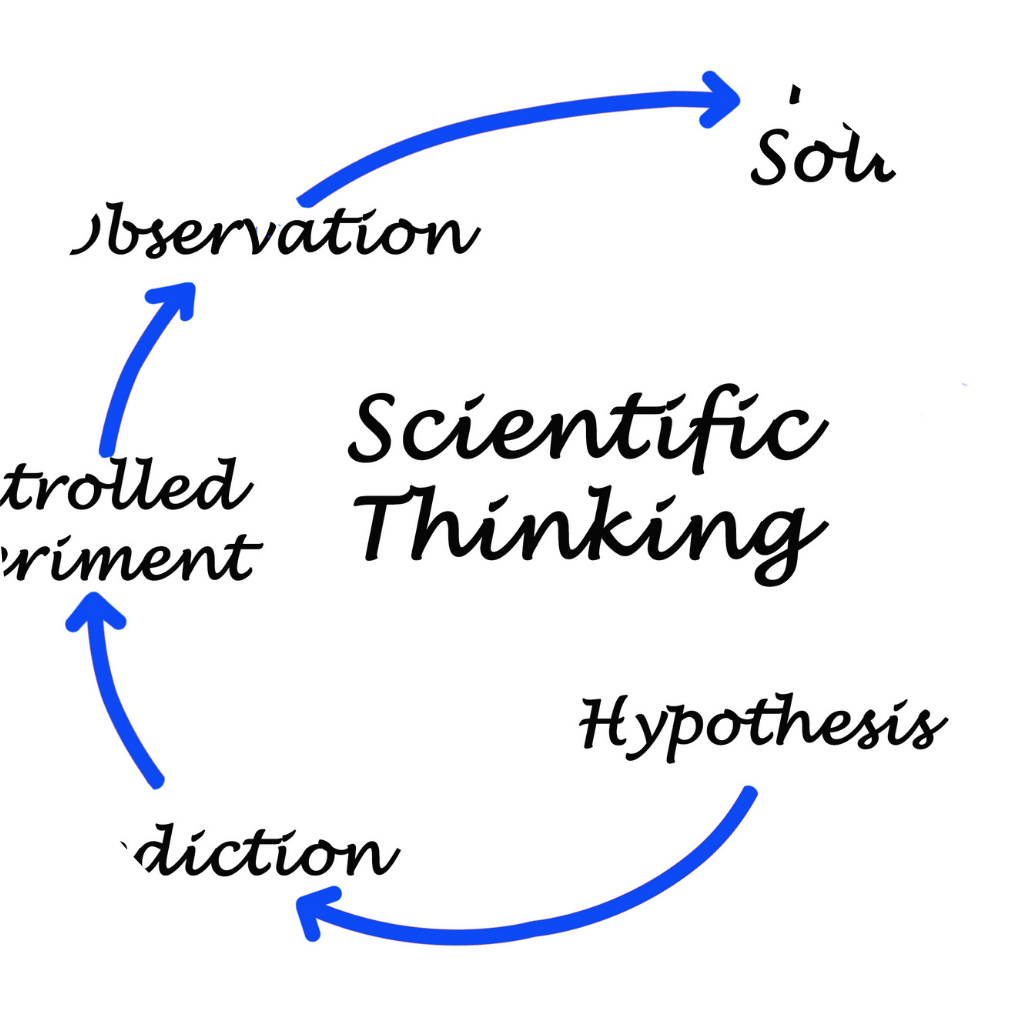
Scientific Thinking (Ages 12-16)
Scientific Thinking (Ages 12-16) skills encompass the following sub-skill
Skills tested with Scientific Thinking (Ages 12-16) game are:
- The Scientific Method
- Starting Small
- Starting Small- Real Life Applications
- Anchors
- Drawing Conclusions
- Patterns
- Patterns in Science
- Breaking Patterns
- The Elimination Tool
Description
An in depth look at the skill this test will accomplish:
The Scientific Method
- Description:In this workout session, students will become acquainted with the sequential steps of the scientific method, a framework employed for planning, problem-solving, and decision-making. This methodology will be demonstrated through the Mystery Box game.
- Leading game:The Mystery Box
The Mystery Box is a rule-free game where the goal is to find the right sequence of actions using creative thinking. Each challenge is unique, but students will discover repeating solution patterns as they progress.
Starting Small
- Description:This workout presents the Starting Small method, which is exemplified through the game of King’s game. Through this approach, we will observe how dissecting a modest and uncomplicated game scenario can yield valuable insights into the larger game. This process can significantly enhance our gameplay in more extensive and intricate situations.
- Leading game:The Kings Game
The Kings game is a fast-paced and strategic game that hones precise move planning. Players practice their ability to strategize from the end point or target, making crucial decisions on their first move after assessing the situation.
Starting Small- Real Life Applications
- Description:This workout aims to enhance students’ comprehension of the Starting Small method. Participants will have the chance to apply this method to more complex game positions. In particular, we will offer instances of diverse applications of this method in both the realm of games and science, highlighting several of its advantages.
- Leading game:The Kings Game
The Kings game is a fast-paced and strategic game that hones precise move planning. Players practice their ability to strategize from the end point or target, making crucial decisions on their first move after assessing the situation.
Anchors
- Description:In this workout, a new puzzle game called Lights On is introduced, along with the concept of Anchors. Participants will actively participate in game levels that require the identification of Anchors. Through this they will come to understand how these Anchors play a pivotal role as invaluable tools for uncovering solutions.
- Leading game:LightsOn
LightsOn is an engaging puzzle game that offers a progressive difficulty level. The objective is to strategically place light bulbs to illuminate the game board. To succeed, students must apply logical reasoning and seek out key anchors that will systematically guide them towards the goal. As they navigate through the challenges, their ability to think critically and strategically will be sharpened.
Drawing Conclusions
- Description:This workout will further develop the previous experience students have gained with the Anchors concept. We will delve into game scenarios where Anchors might be implicit, necessitating proactive exploration and inquiry to uncover them. Additionally, we will explore our ability to draw conclusions not only from explicit facts but also from our existing knowledge and experiences.
- Leading game:LightsOn
LightsOn is an engaging puzzle game that offers a progressive difficulty level. The objective is to strategically place light bulbs to illuminate the game board. To succeed, students must apply logical reasoning and seek out key anchors that will systematically guide them towards the goal. As they navigate through the challenges, their ability to think critically and strategically will be sharpened.
Patterns
- Description:During this workout, we will familiarize ourselves with a new strategic game called Night Watch. We will analyze game positions and investigate a specific pattern that ensures victory for the guards. Once this pattern is identified, we will broaden our understanding of patterns in a more general context—discussing their definitions, known patterns, and more.
- Leading game:Night Watch
Night Watch game is a strategic game played on a checkered board, featuring 4 guards and a thief. Both sides have opposing goals, with the thief aiming to find an escape route while the guards collaborate to capture and restrict the thief’s movements. This game encourages players to delve into the mindset of the opposing party to understand their game plan, adding an element of strategic thinking and empathy to the gameplay.
Patterns in Science
- Description:This workout extends the exploration of patterns, with a specific focus on their applications in the realm of science. By using advanced game positions as examples, students will refine their ability to identify and follow patterns.
- Leading game:Night Watch
Night Watch game is a strategic game played on a checkered board, featuring 4 guards and a thief. Both sides have opposing goals, with the thief aiming to find an escape route while the guards collaborate to capture and restrict the thief’s movements. This game encourages players to delve into the mindset of the opposing party to understand their game plan, adding an element of strategic thinking and empathy to the gameplay.
Breaking Patterns
- Description:This workout will present students with the challenge of initially identifying and recognizing patterns within games. However, equally significant will be the task of breaking common patterns that can constrain our thinking.
- Leading game:The Mystery Box
The Mystery Box is a rule-free game where the goal is to find the right sequence of actions using creative thinking. Each challenge is unique, but students will discover repeating solution patterns as they progress.
The Elimination Tool
- Description:This workout introduces a new concept known as elimination. We will apply the principle of elimination through the game Eco Logic. Through this process, we will discover that constraints can assist us in uncovering solutions when employed wisely. By identifying the alternatives they rule out, we can effectively deduce the correct path forward.
- Leading game:Eco Logic
Eco Ligic is an engaging puzzle game that features a game board composed of squares and path-shaped game tiles. In each stage of the game, students will be presented with a list of tasks and constraints. Their objective is to strategically assemble routes on the game board based on the given list. By doing so, the game fosters logical thinking, encourages effective planning, and enhances understanding of constraints.