Sub-Total: R0.00
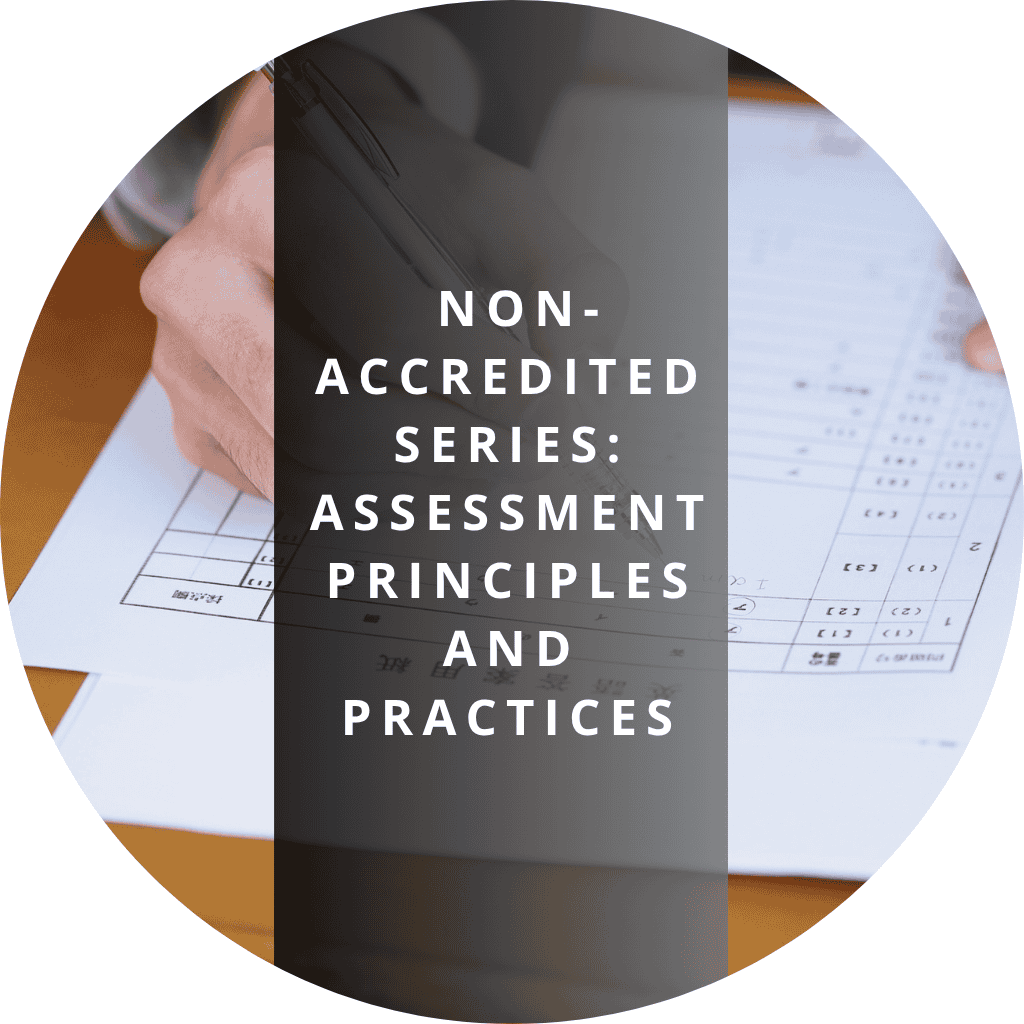
Assessment principles and practices
NQF Level: 5 | Credits: 4 | Duration: 2 Days (Non‑Accredited)
Entry Requirements: Communication at NQF Level 4; basic understanding of learning facilitation, occupational standards, and workplace performance requirements.
Develop the skills to plan, conduct, and review assessments in alignment with occupational and statutory requirements. This course equips Training and Development Practitioners to apply valid, fair, reliable, and consistent assessment methods in workplace and learning environments. Learners will learn how to design assessment instruments, gather credible evidence, support learners, and improve assessment practices through reflective and compliant processes.
Description
Purpose and Rationale
This Unit Standard equips Training and Development Practitioners with the competencies required to design, implement, and review assessments within occupational and training settings. Learners will explore the principles that underpin good assessment practice, including validity, reliability, fairness, sufficiency, authenticity, and currency.
Participants will gain the ability to plan structured assessments, select appropriate methods and instruments, conduct assessments ethically and professionally, record accurate decisions, provide feedback, and engage in continuous improvement. The course supports compliance with QCTO, SETA, SAQA, and organisational requirements — ensuring that assessment decisions are credible, defensible, and aligned to occupational standards.
Course Content
Learners will gain practical skills and knowledge in:
Core Assessment Principles
- Understanding validity, reliability, fairness, sufficiency, authenticity, and currency
- Ethical conduct, confidentiality, and learner rights
- Statutory and organisational compliance requirements
Planning & Preparing for Assessment
- Interpreting occupational standards and learning outcomes
- Selecting suitable assessment methods (observation, questioning, simulations, product evaluation, portfolios)
- Developing assessment plans, tools, and resources
- Preparing logistics, timelines, and environments conducive to assessment
Conducting Assessments
- Applying assessment principles during implementation
- Gathering evidence that meets quality criteria
- Managing the assessment process professionally and transparently
- Accurately recording assessment decisions
Providing Feedback & Learner Support
- Communicating feedback constructively
- Addressing competence gaps with remedial guidance
- Supporting learner progression and development
- Maintaining clear feedback and progress records
Reviewing and Improving Assessment Practice
- Reflecting on assessment quality and processes
- Using moderation findings to strengthen future assessments
- Recommending improvements to tools, methods, and procedures
Who Should Enrol?
This course is ideal for:
- Training and Development Practitioners
- Skills Development Facilitators
- Workplace Assessors and Supervisors
- Learning & Development Officers
- Anyone responsible for evaluating competence in the workplace
Entry Requirements
Learners are assumed to have:
- Communication skills at NQF Level 4
- Basic understanding of facilitation, learning outcomes, and occupational roles
- Familiarity with workplace performance and HR processes
Recognition of Prior Learning (RPL)
RPL may be granted based on:
- Assessment plans, tools, evidence records, feedback documents
- Moderation reports or assessment portfolios
- Demonstrated competence in planning, conducting, or reviewing assessments
Learning Outcomes & Assessment Criteria
Outcome 1: Plan and Prepare for AssessmentLearners will be able to:
- Interpret occupational standards and outcomes
- Select suitable methods and instruments
- Develop assessment plans, logistics, and resources
- Ensure compliance with ethical and legal requirements
Outcome 2: Conduct Assessments Using Approved MethodsLearners will be able to:
- Apply principles ensuring validity and reliability
- Gather sufficient and authentic evidence
- Manage assessment processes professionally
- Record decisions accurately and securely
Outcome 3: Provide Feedback and Support to LearnersLearners will be able to:
- Deliver clear and constructive feedback
- Offer remedial support for competence development
- Maintain accurate feedback and progress records
Outcome 4: Review and Improve Assessment PracticesLearners will be able to:
- Reflect on assessment strengths and gaps
- Use moderation findings to improve assessments
- Recommend improvements to tools and processes
Integrated Assessment
Formative Assessment
- Draft assessment plans
- Design assessment instruments
- Peer reviews
- Observation checklists
Summative Assessment
- Practical assessment session demonstrating competence
- Assessment Portfolio including plans, instruments, evidence, feedback records, and review notes
Integrated Assessment
- Workplace/WIL observation
- Verification of assessment competence