
Sub-Total: R0.00
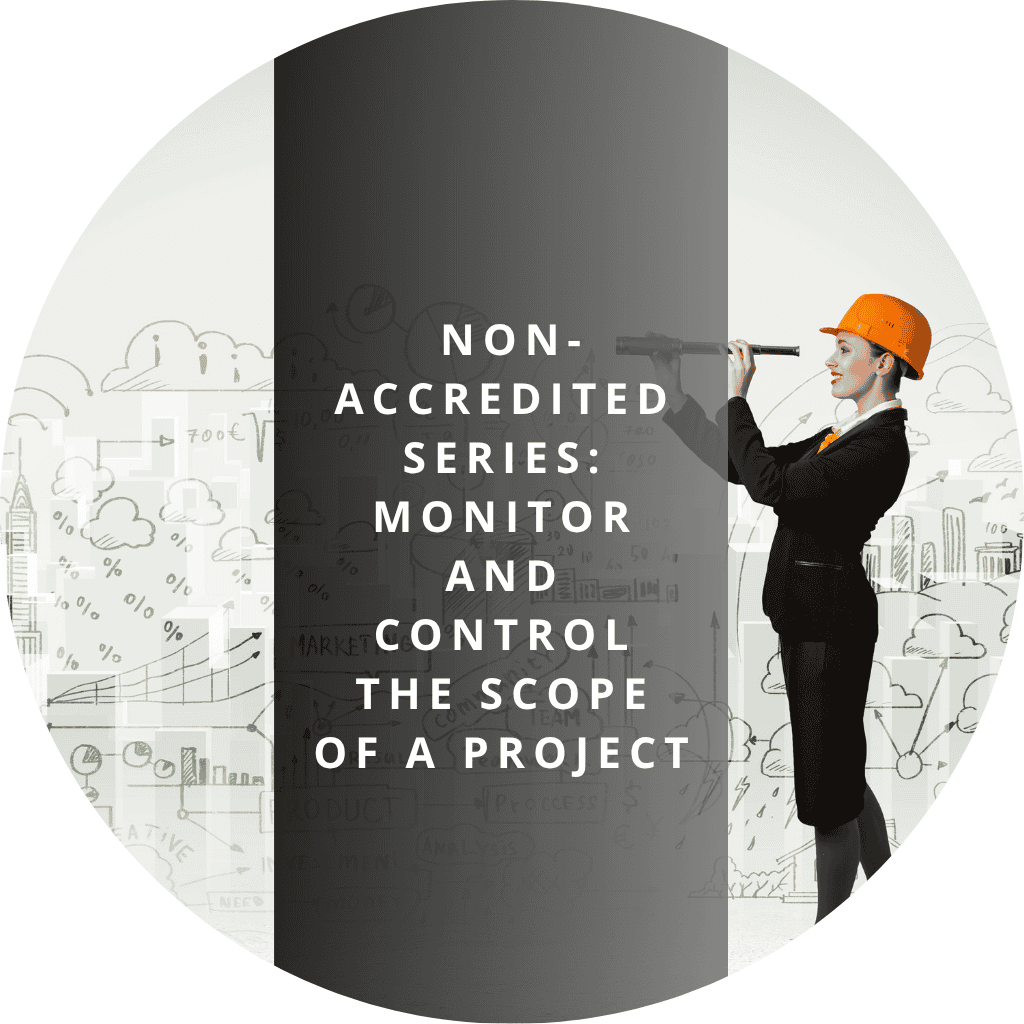
Monitor and control the scope of a project
Monitor and Control the Scope of a Project
NQF Level: 5 | Credits: 8 | Duration: Non‑Accredited | Entry Requirements: NQF 4 Communication & Mathematical Literacy
This course equips learners with the skills to monitor and control project scope effectively. Learners will track scope performance, implement change‑control procedures, communicate scope status clearly, and prevent scope creep to ensure project success and alignment with organisational objectives.
Description
Purpose and Rationale
This unit standard equips learners with the practical skills to monitor and control project scope effectively, preventing scope creep and ensuring alignment with approved project objectives. It focuses on applying scope‑management techniques, implementing formal change‑control processes, and communicating scope‑related information accurately to stakeholders.
Learners will develop the ability to maintain project boundaries while accommodating controlled and authorised changes. This course prepares learners to support organisational governance, deliver consistent project outcomes, and uphold quality and compliance within diverse project environments.
Learning Assumed to Be in Place
Learners are assumed to have:
- Communication skills at NQF Level 4
- Mathematical Literacy at NQF Level 4
- A basic understanding of project scope definition and planning
Recognition of Prior Learning (RPL)
RPL may be granted where learners provide evidence such as:
- Scope‑management documents
- Change logs or issue registers
- Project performance reports demonstrating scope‑control involvement
- Workplace portfolios or challenge assessments
Course Range
This unit applies to:
- Projects of varying sizes and levels of complexity
- Monitoring scope against an approved baseline
- Ensuring changes follow formal change‑control procedures
- Using tools and techniques such as scope verification, validation, and control
- Complying with governance, audit, and stakeholder requirements
Learning Outcomes & Assessment Criteria
Outcome 1: Monitor project scope against the approved plan
Assessment Criteria:
1.1 Compare actual deliverables to the scope baseline
1.2 Identify deviations and analyse their potential impact
1.3 Use tools and techniques to track scope performance
Outcome 2: Implement scope control processes
Assessment Criteria:
2.1 Apply change‑control procedures to manage scope adjustments
2.2 Evaluate proposed changes for impact on time, cost, and quality
2.3 Update the scope baseline with all approved changes
Outcome 3: Communicate scope status to stakeholders
Assessment Criteria:
3.1 Prepare clear, accurate scope‑status reports
3.2 Explain implications of scope changes on project outcomes
3.3 Maintain transparency and enforce compliance with organisational requirements
Outcome 4: Prevent and manage scope creep
Assessment Criteria:
4.1 Identify early warning signs of uncontrolled scope changes
4.2 Apply corrective actions to maintain project boundaries
4.3 Capture lessons learned for future scope‑management improvements
Related products
-
Use Python Data Scraping to Populate Database Table in SQL
Read more -
Apply Basic Knowledge of Statistics and Probability to Influence the Use of Data and Procedures in Order to Investigate Life-Related Problems
Read more -

Maintain an Existing Information System in a Business Environment
Read more -

Identify, Describe, Compare, Classify, Explore Shape and Motion in 2- and 3-Dimensional Shapes in Different Contexts
Read more